
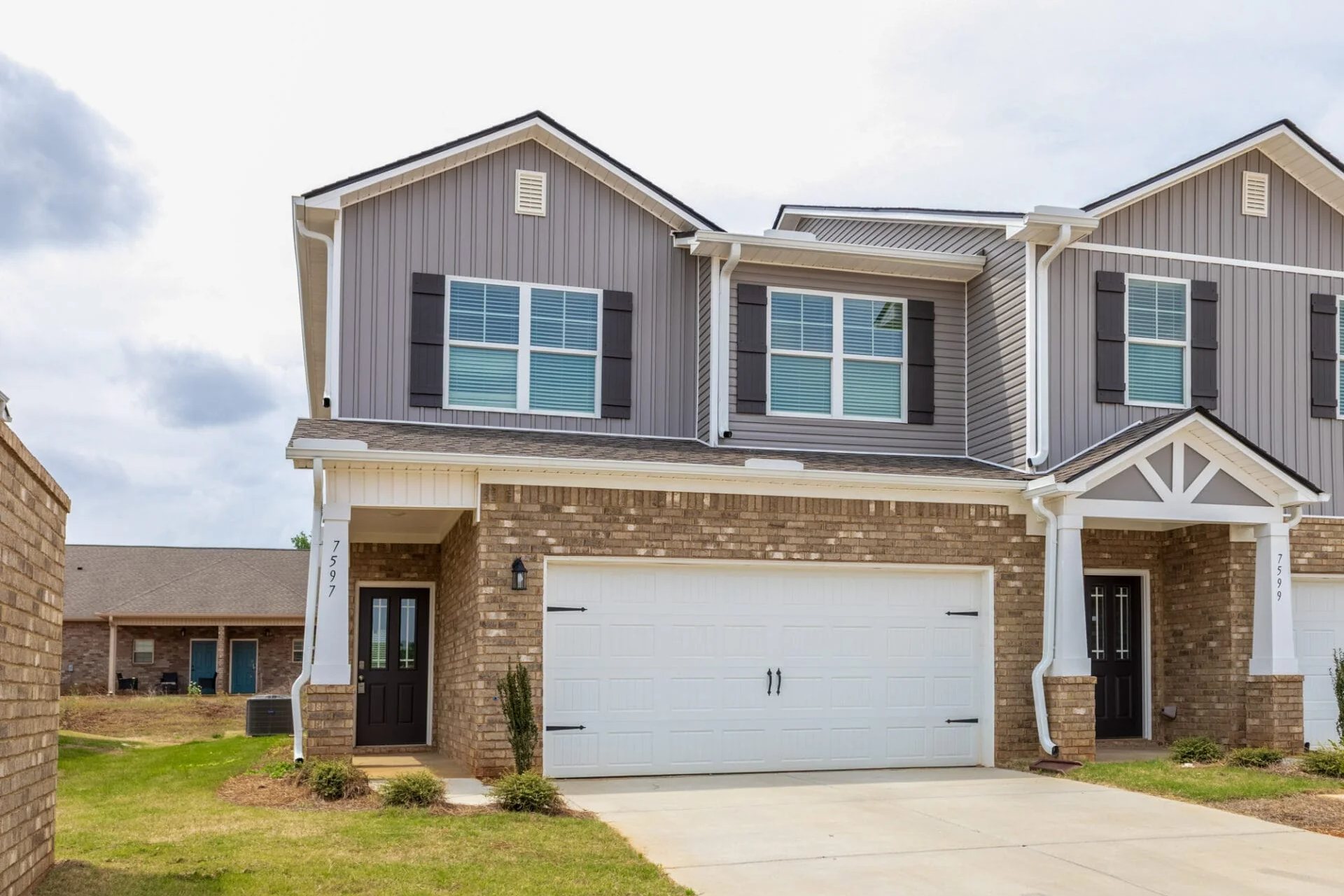
Illustrative video built from project photos
Home / Arabella Debt Fund
Arabella Debt Fund
Short-term income secured by real estate.
Step into the lender’s seat on Arabella’s short-term bridge loans. Fixed interest, paid monthly, for 12 or 24 months.
Private offering. Accredited investors only. Eligibility and terms vary by fund.
Target Returns
Annual yield range
Payouts
Month holds
Yield is set by contract within the stated range and depends on share class and amount. Repayment depends on the borrower and the real estate. Source: Arabella Capital website, Sept. 2026 backup. Confirm against current offering documents.
The problem
Real estate returns tend to come with a catch.
Direct ownership: all the work and all of the exposure.
Syndications and funds: lower yield, long waits and often no cash flow along the way.
Alternatives: often complex or restrictive.
A different way to earn
Short holds. Fixed monthly interest.
Arabella’s development model uses short-term bridge loans to move projects from acquisition to construction. Instead of sending those interest payments to a single outside lender, the Debt Fund invites accredited investors to step into that role and earn fixed monthly income secured by real estate.
How it works
A simple structure, in four steps.
You commit short-term capital.
Choose a 12-month C Share or a 24-month B Share. Once received, your capital enters a 90-day placement window. Your rate begins once your funds are placed.
Your money funds real estate loans.
Your money funds short-term real estate loans. About half are bridge loans. About half are mezzanine loans, which sit behind other lenders on the property and carry more risk. Loans to Arabella’s own projects need approval from an independent loan committee.
You earn monthly interest.
Interest is paid monthly. C Shares start at 8 to 10% and B Shares pay 10 to 12%, depending on the loan mix. Payments depend on borrowers repaying the fund and aren’t guaranteed.
Your principal returns at term.
Your capital is repaid at 12 or 24 months. C Shares can extend in six-month steps, each adding 1% to the yield.
The team behind it
This fund works because the engine behind it works.
The team has spent two decades on single-family rentals, build-to-rent communities, storage and short-term rentals, raising and deploying hundreds of millions of dollars.
The short-term bridge model is one Arabella has used for almost a decade across dozens of projects. Access the data room to review the performance record.
Questions
Frequently asked questions.
What are the investment terms and minimums?
The minimum investment is $100,000. You choose between two share classes:
- C Shares, 12-month commitment: 8 to 10% annual yield*
- B Shares, 24-month commitment: 10 to 12% annual yield*
Both pay interest monthly. C Shares can extend in six-month increments, each adding 1% to the rate. Larger investments add to the rate: 0.5% at $500K, 0.75% at $750K and 1% at $1M.
*Rates shown are for the standard tier, $100,000 to $499,999. Actual returns depend on the mix of bridge and mezzanine loans and aren’t guaranteed.
How quickly is my capital placed into a loan?
The fund aims to place your capital in loans within 30 to 90 days. That window is there so funds go into a properly underwritten loan, not a rushed one.
Interest and your hold period both start when your capital is placed. Interest earned on cash waiting to be placed goes to the fund for expenses, not to investors. After 90 days, you can ask for undeployed capital back.
How do bridge and mezzanine loans differ?
Bridge loans, about half the portfolio, are short-term loans that finance a property’s purchase, renovation or stabilization.
Mezzanine loans, about the other half, sit behind other lenders on the property, so they carry more risk. Where each loan stands in repayment is set out in the offering documents in the data room. Either way, repayment depends on the borrower and the real estate.
How do you choose which loans the fund makes?
About 70 to 75% of the fund lends to Arabella Real Estate Fund, an affiliate under common management. The other 25 to 30% goes to outside developers. Loans are expected to be secured by the real estate, hard assets or equity in the borrower.
- Loans to the affiliate need approval from an independent loan committee, which must find the terms equal to or better than comparable outside loans.
- Outside borrowers are developers with 10 or more years of experience and five or more completed projects, in Southeast markets.
- Outside loans run $500K to $3M, up to 70% loan to value.
How is this different from a syndication or equity deal?
Equity investments depend on project performance and exit timing. They often involve 5 to 7 year holds, no cash flow during development and variable returns.
The Debt Fund is structured differently: monthly interest payments, 12 to 24 month minimum holds, and loans secured by real estate or equity in the borrower. Returns still depend on borrowers repaying the fund.
Is my return tied to project performance or market conditions?
Indirectly. The fund pays you from what borrowers pay it. If borrowers don’t pay, the fund can’t pay you, and it can suspend distributions. The stated minimums are 8% for C Shares and 10% for B Shares, and none of it is guaranteed. Review the risk factors in the offering documents.
Is this open to non-accredited investors?
No. The Debt Fund is a Rule 506(c) offering and is open only to accredited investors.
Want the full details?
Request the PPM to see how it is structured, the terms and the track record, or start your investment. Eligibility is confirmed before any investment.